FEATURED ARTICLE
Credit Alerts: What They Are and How They Can Help Protect Your Credit

Jasmin Wilson
November 20, 2026 •3 min read
TABLE OF CONTENTS
What are credit alerts?
Why are credit alerts important?
What can affect your credit score?
Credit score vs credit report vs credit alerts
Check your credit with Emma
Do I need a perfect credit score?
Stay one step ahead of your credit
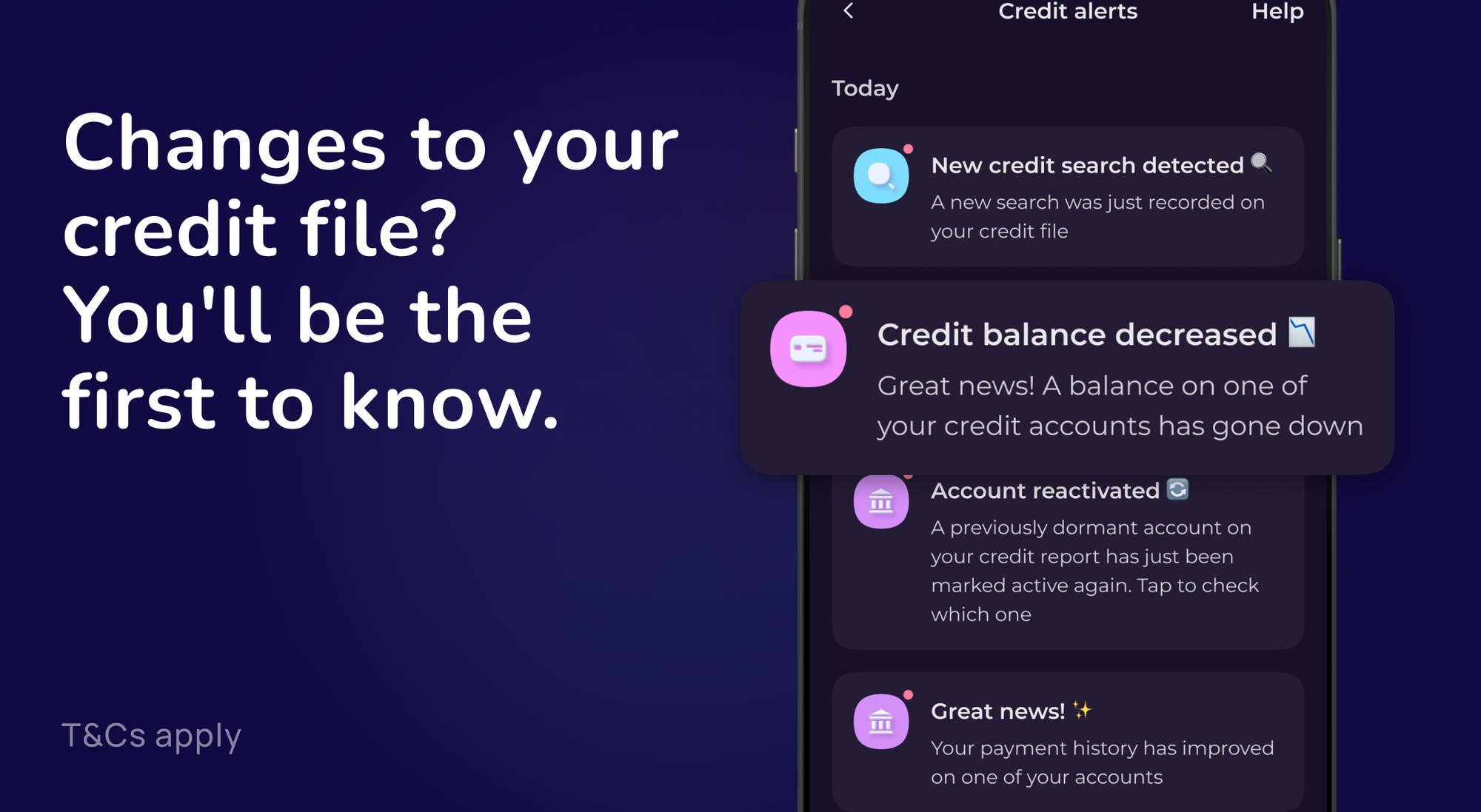
Credit alerts can help you stay informed about changes to your credit profile, spot suspicious activity and keep track of your financial health. With Emma, you can get credit alerts alongside your credit score, credit report, spending and budget, all in one place.
Whether you’re preparing to apply for a mortgage, managing your borrowing or simply want to stay on top of your finances, understanding what’s happening on your credit profile can help you make more informed financial decisions.
What are credit alerts?
Credit alerts are notifications that let you know when certain changes are recorded on your credit profile.
They can help you spot changes to your credit history, identify potentially unauthorised borrowing and catch signs of identity theft earlier.
Depending on the type of change, you may receive a credit alert when there are:
- New or amended credit accounts – Be notified when a new credit account is opened or information on an existing account changes.
- Settled accounts – Know when a credit account has been marked as settled.
- Noticeable balance increases – Get an alert when the balance on one of your credit accounts increases significantly.
- Changes to payment status – Stay informed if your payment status improves or deteriorates.
- Defaults or credit-limit breaches – Be notified if an account goes into default or you exceed a credit limit.
- Address changes – Know when a change of address is recorded on your credit profile.
- CCJs and insolvency-related events – Get an alert if a County Court Judgment (CCJ) or certain insolvency events are recorded against you.
- New CIFAS records – Be notified if a new record is added to CIFAS, the UK’s fraud prevention service, which could indicate suspected fraudulent activity linked to your details.
Why are credit alerts important?
Your credit score is an important part of your financial profile, but it’s not the whole picture.
Your credit report contains information about your borrowing and repayment history, while credit alerts can help you keep track of important changes to that information.
For example, if you receive an alert about a credit account you don’t recognise, you can investigate it and take action as soon as possible.
This can be particularly useful when it comes to protecting yourself against identity theft and unauthorised borrowing. The sooner you spot something unexpected, the sooner you can investigate it.
Credit alerts can also help you stay aware of changes to your credit profile without needing to constantly check your credit report.
What can affect your credit score?
There are several factors that can influence your credit score and how lenders view your credit history.
These can include:
- Your history of making repayments
- The amount of credit you currently use
- Your outstanding balances
- Defaults or missed payments
- The number and type of credit accounts you have
- Applications for new credit
- Information recorded on your credit report
It’s important to remember that credit scores can vary between credit reference agencies, and different lenders may use different information when assessing your application.
That’s why keeping an eye on your wider credit profile – rather than focusing solely on your score, can be useful.
Credit score vs credit report vs credit alerts
Not sure what the difference is between a credit score, credit report and credit alerts?
Credit score
Your credit score is a number designed to give you an indication of your creditworthiness based on information in your credit history.
Credit report
Your credit report contains more detailed information about your credit history, including accounts, borrowing and repayment information.
Credit alerts
Credit alerts notify you when certain changes are recorded on your credit profile, helping you stay informed without having to manually check for every change.
Together, they can give you a clearer picture of your overall credit health.
Check your credit with Emma
With Emma, you can manage your credit alongside your everyday finances. The credit features you can use depend on your Emma plan.
You can:
- Check your credit score to see where you stand
- View your full credit report to understand more about your credit history
- Get credit alerts when certain changes occur
- Track your credit alongside your spending and budget
Instead of jumping between different tools to manage your money, Emma brings your finances and credit information together in one place.
Do I need a perfect credit score?
Not necessarily.
You might not need a perfect credit score today. But understanding your credit can become increasingly important when you’re planning for major financial milestones, such as getting a mortgage, applying for a loan or taking out a new credit card.
The important thing is to understand your credit profile and stay informed about changes that could affect it.
The earlier you know about a change, the sooner you can investigate it and take action if needed.
Stay one step ahead of your credit
Your credit score is only one part of your financial health. By keeping track of your credit score, credit report and credit alerts, you can get a clearer picture of your credit profile and stay informed when things change.
With Emma, you can keep track of your credit alongside your spending and budget — all in one place.
Stay informed. Stay prepared. Stay in control with Emma.
Credit scores and reports are provided for informational purposes and may not be the same as those used by lenders.
You may also like
Check out these related blog posts for more tips






Over 3 million downloads
We are on a mission to improve everyone's financial wellbeing.